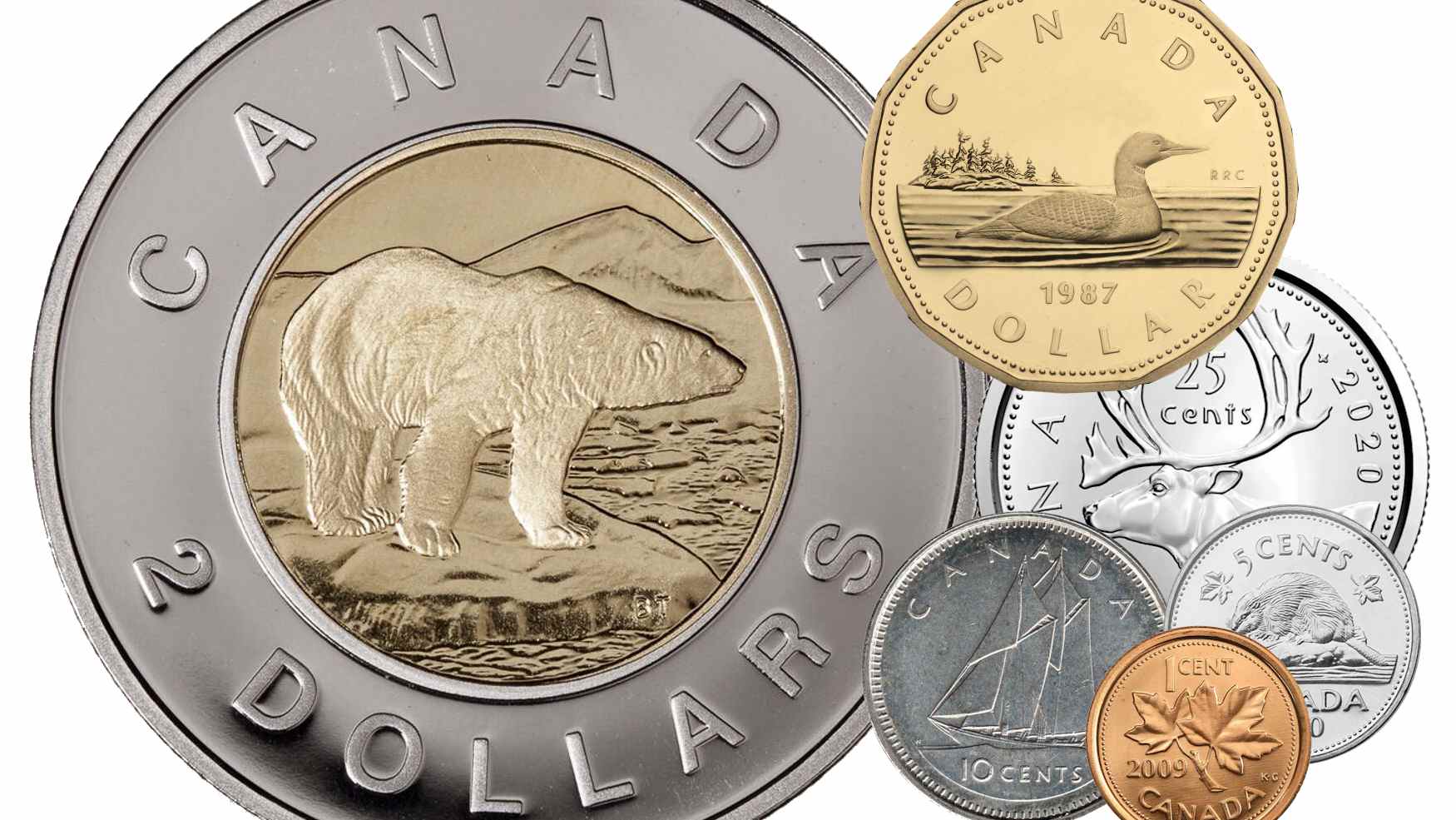
Canadian coins are much more than just everyday currency. They are small pieces of national history, featuring images of wildlife, maritime history, northern landscapes, and symbols that Canadians recognize instantly. These designs have made their way into wallets, piggy banks, cash registers, and coat pockets for generations, becoming an integral part of Canada’s visual identity.
At Canada Gold, we understand that Canadian coins can hold a significance that goes beyond their face value. Whether you’re exploring the Royal Canadian Mint’s precious metal investment products, examining heirloom coins, or simply curious about a design you’ve seen for years, each coin can bring you closer to Canada’s history, its artisanal craftsmanship, and its timeless national symbols.
The Beaver
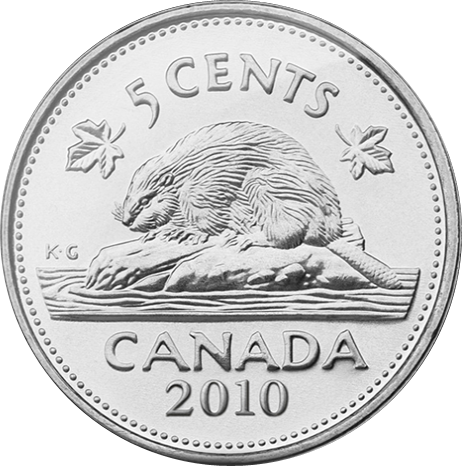
The beaver has appeared on the Canadian five-cent coin since 1937. Designed by G.E. Kruger Gray, the well-known image depicts the animal sitting on a rock, surrounded by water. It is one of the country’s longest-running coin designs.
The presence of the beaver on Canadian currency reflects its importance in the early economic and cultural history of Canada. During the fur trade era, beaver pelts accounted for a significant portion of trade in what would become Canada. The animal then became an official emblem of Canada in 1975, but its connection to the country had been established long before that.
It is also a fitting symbol for a coin that has remained in circulation for generations. Beavers are known for building, adapting to, and shaping their environment—qualities that make this design distinctly Canadian, even today.
The Bluenose
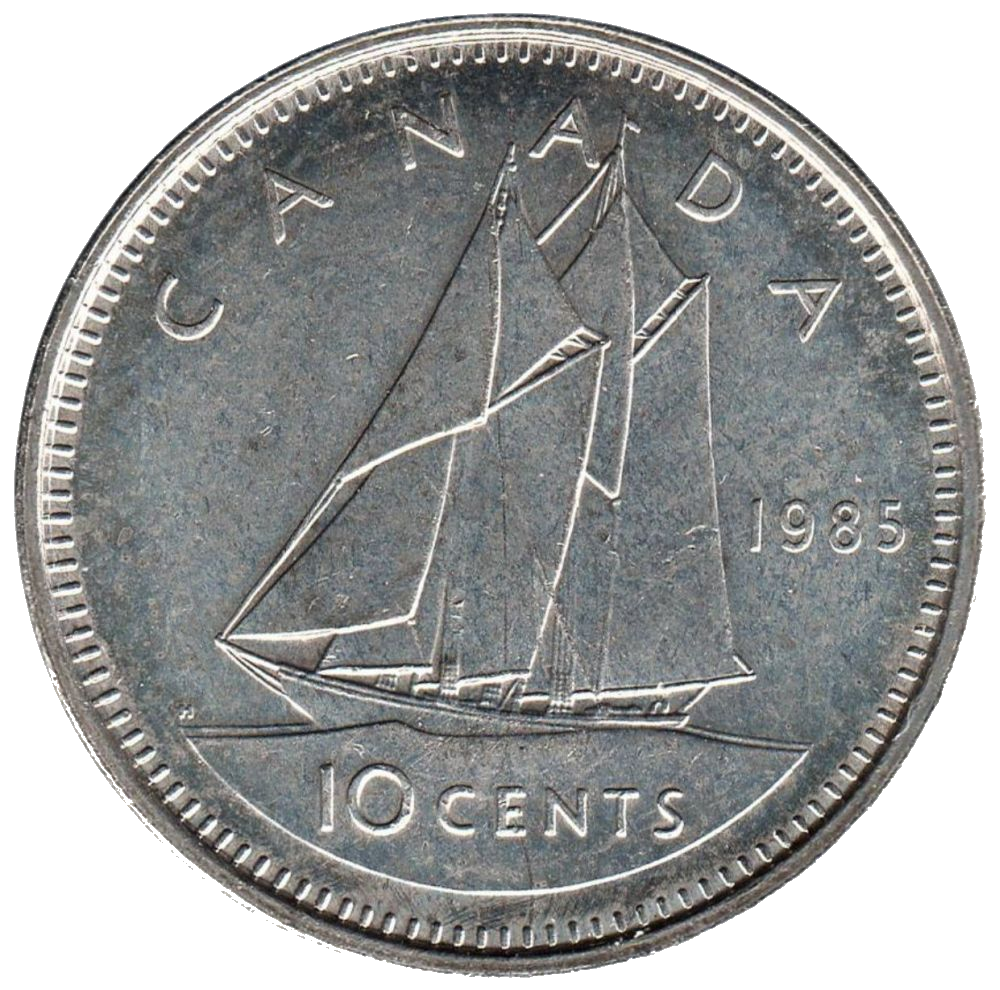
The dime features the Bluenose, the famous schooner built in Lunenburg, Nova Scotia. The coin’s original design was created by artist Emanuel Hahn and introduced in 1937.
The Bluenose has become a Canadian icon thanks to its successes in international fishing schooner competitions. Fast, high-performing, and designed for Atlantic conditions, the ship has come to represent Nova Scotia’s maritime heritage, Canadian shipbuilding, and the expertise of the people who worked on the water.
Despite the small size of the dime, the design conveys a sense of movement and grandeur. The schooner’s sails, its bow cutting through the water, and the open space surrounding it create a lasting image of Canada’s maritime history.
The Caribou
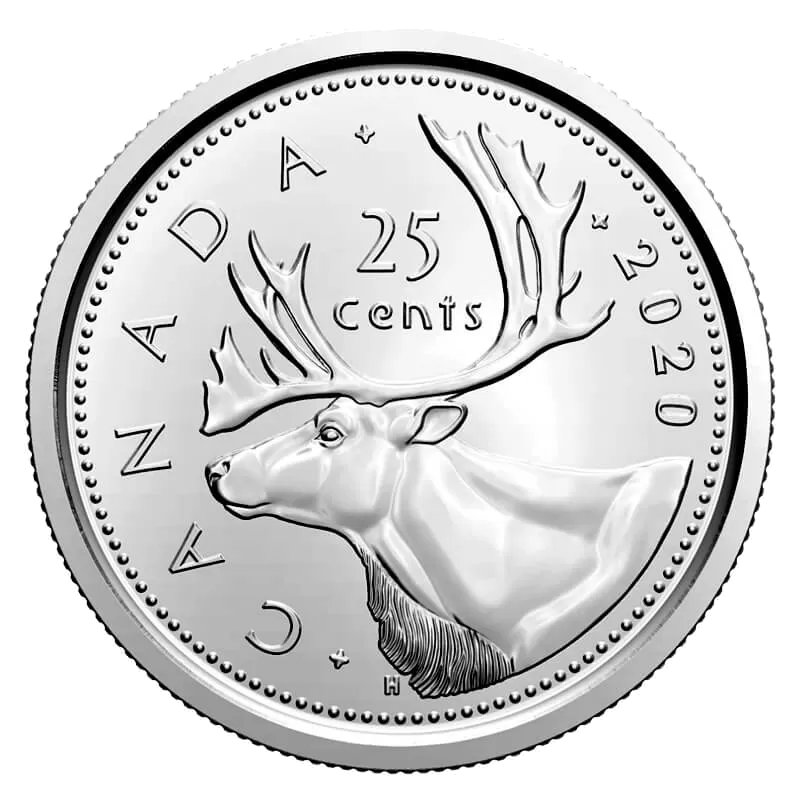
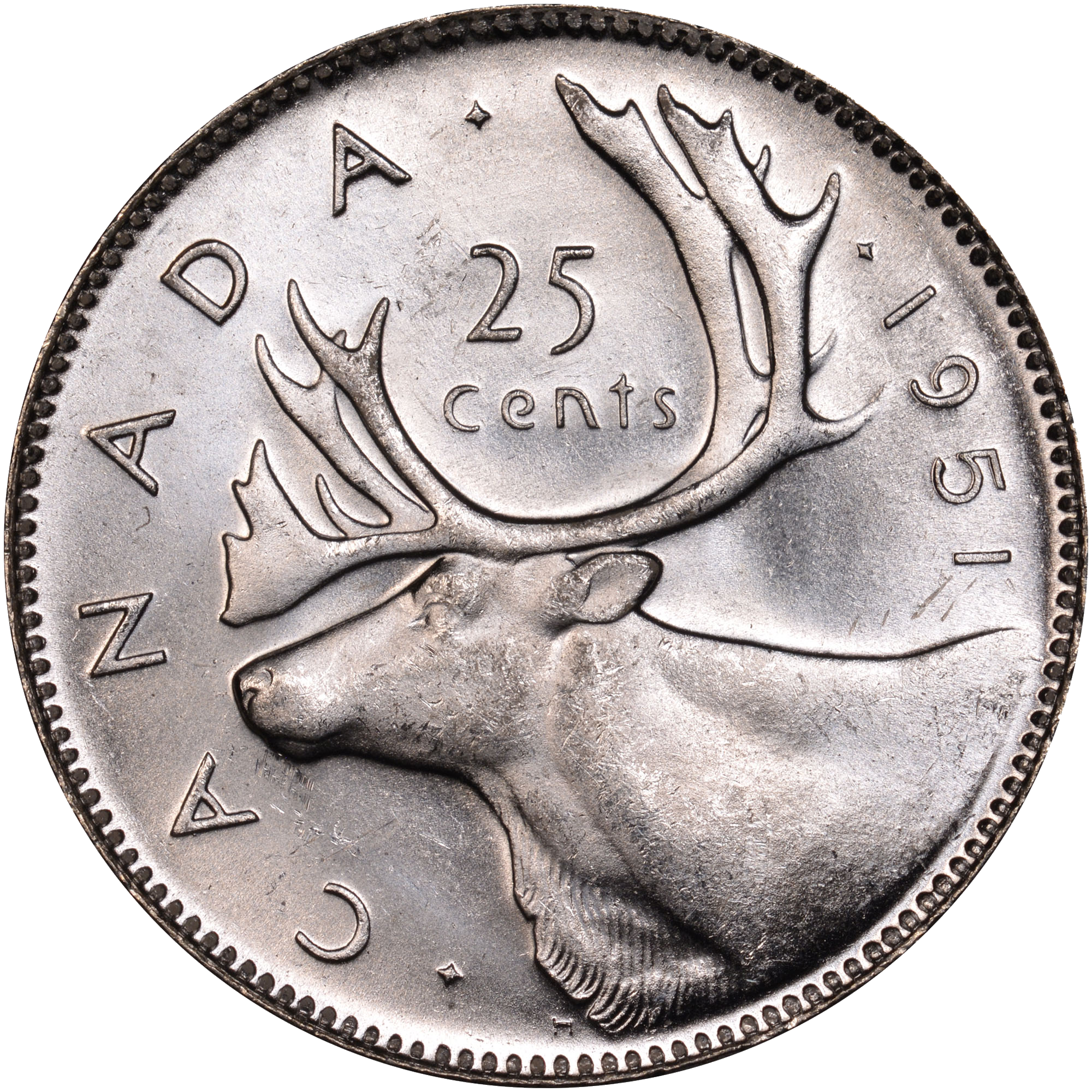
The animal depicted on the Canadian 25-cent coin is a caribou—not a moose, as is sometimes mistakenly believed. The caribou design has appeared on Canadian 25-cent coins since 1937 and was also created by Emanuel Hahn.
Caribou have long been associated with Canada’s northern regions, where their migrations cover immense distances through forests, tundra, and vast open landscapes. They hold cultural and economic significance for First Nations and Inuit communities in the North, making the image on this coin a meaningful reflection of the country’s geography and diversity.
The caribou on the 25-cent coin is one of the most recognizable animal designs on Canadian currency. Its large antlers and alert posture make it easy to recognize, even after decades in circulation.
The loon
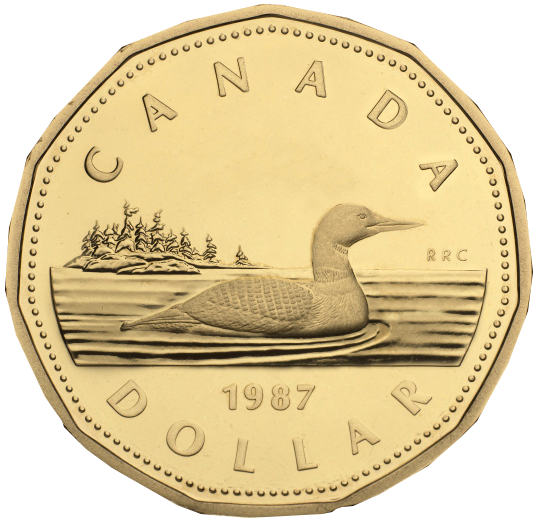
In 1987, Canada introduced the one-dollar coin to replace the one-dollar bill. The new coin featured a common loon floating on the water, in a design created by wildlife artist Robert-Ralph Carmichael. Canadians quickly gave the coin a nickname: the loon.
This name has become so common that it is now part of Canadians’ everyday language. It also inspired the colloquial name for Canada’s two-dollar coin: the “two-dollar.”.
The loon’s call is closely associated with Canadian lakes, summer cottages, and time spent outdoors. Carmichael’s design depicts the bird in a quiet, solitary moment, lending the piece an understated and distinctly Canadian character.
The introduction of the loonie also marked a significant change in Canadian currency. Replacing a paper bill with a durable coin was intended to reduce replacement costs over time, while its 11-sided shape made it easily distinguishable.
The Polar Bear
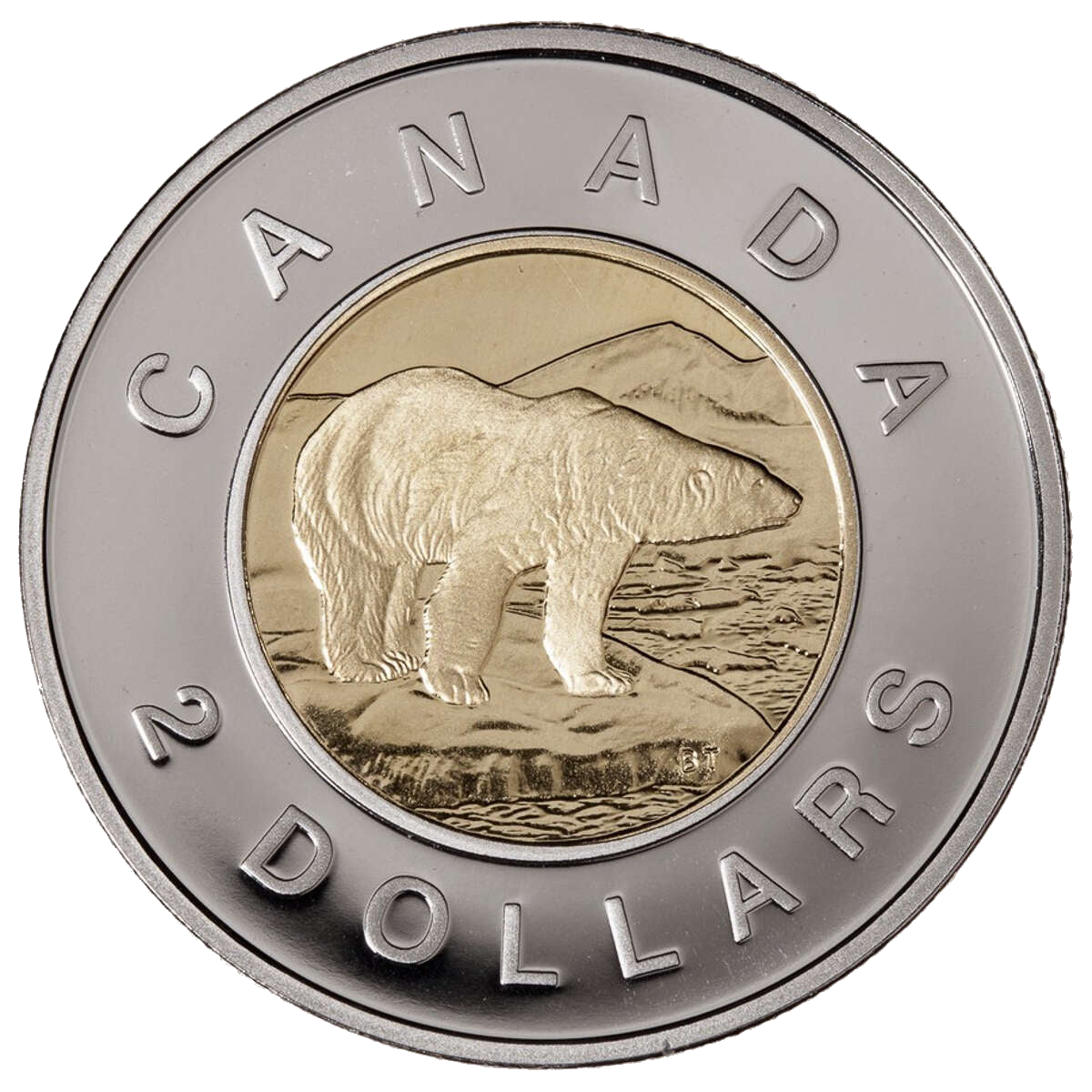
The Canadian two-dollar coin entered circulation in 1996. Designed by wildlife and landscape artist Brent Townsend, it depicts an adult polar bear standing on an ice floe in early summer.
The polar bear has become the latest addition to the well-known series of Canadian circulation coins featuring animal designs. It represents the Arctic and Canada’s northern identity, while paying tribute to a species of great significance to First Nations and Inuit communities in the North.
Creating a memorable design on a small piece is no easy task. Townsend had to convey the bear’s size, strength, and environment without the aid of color or a large canvas. The final design uses the bear’s silhouette, the ice floe, and the clear sky to create a scene that immediately evokes the North.
The bimetallic construction of the two-dollar coin also sets it apart. Its inner core and outer ring give it a look and feel that are immediately different from other coins in circulation.
The Maple Leaf and the 100-cent coin have been taken out of circulation
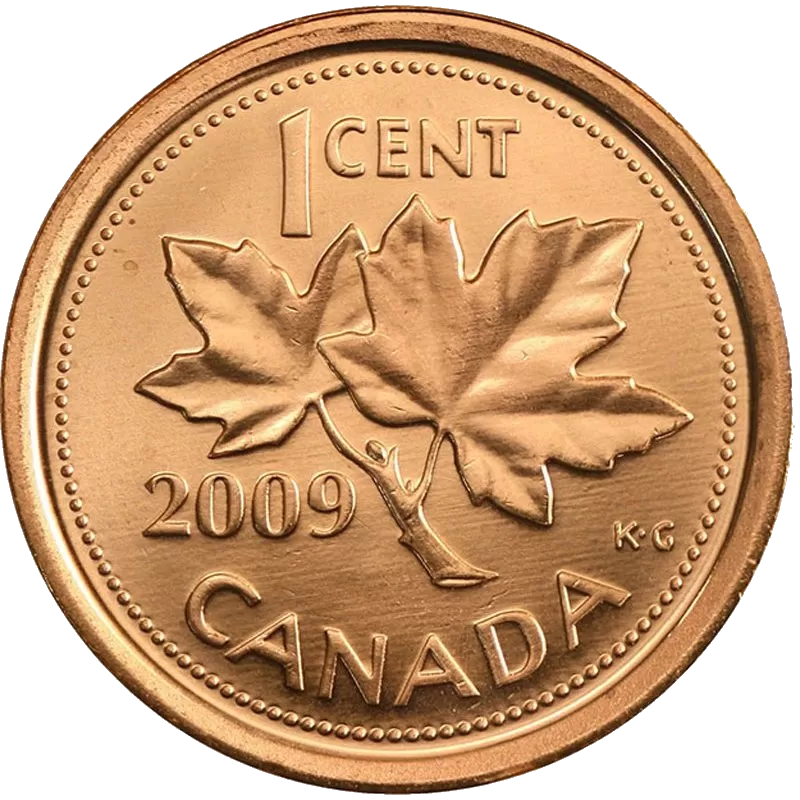
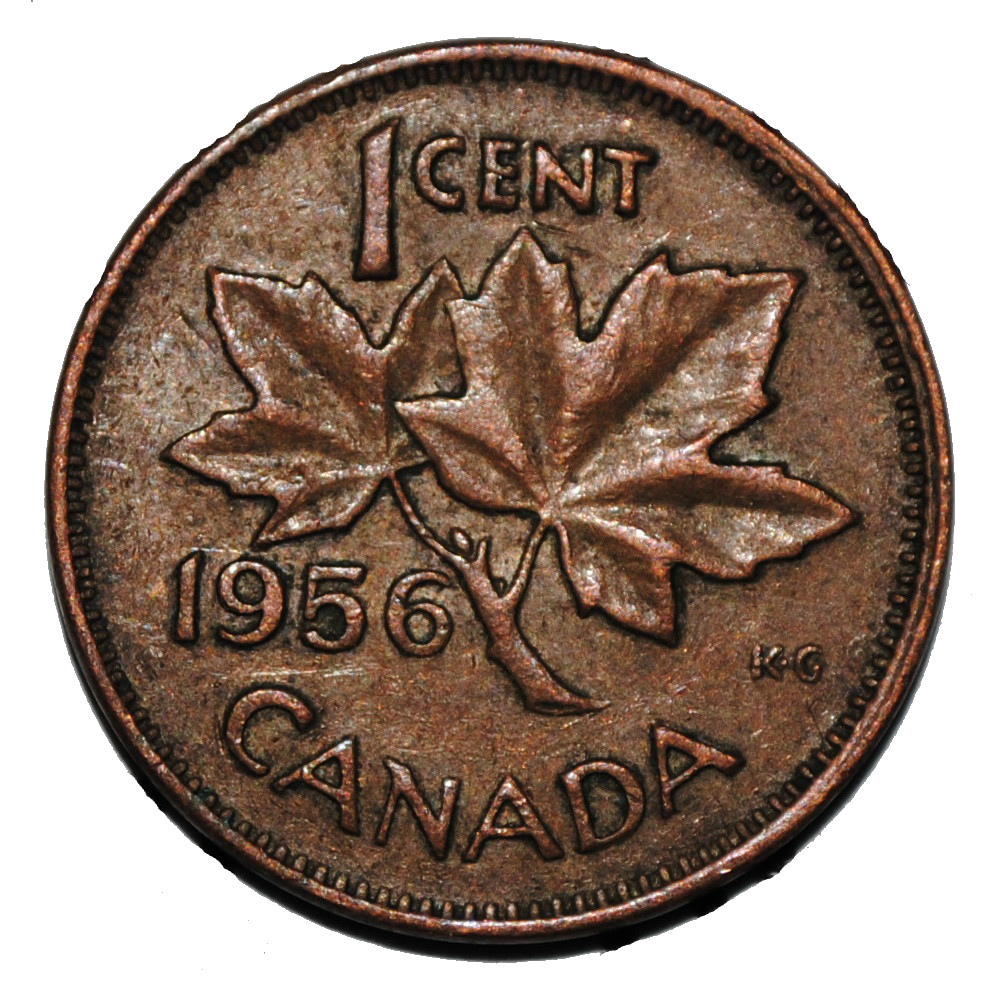
No image is more closely associated with Canada than the maple leaf. It appears on the national flag, in public institutions, in Canadian art, and on some of the country’s most recognizable coins.
For generations, the one-cent coin featured two maple leaves on a single twig. Designed by G.E. Kruger Gray, this image first appeared in 1937 and has become one of the most recognizable images on Canadian currency.
However, the one-cent coin is no longer in circulation in Canada. The Royal Canadian Mint stopped producing one-cent coins for general circulation in 2012, and the federal government ceased distributing them in 2013. Cents are still legal tender, but businesses generally round cash payment totals to the nearest five cents, while electronic payments continue to be billed to the nearest cent.
Although the cent is no longer in circulation, it remains a familiar part of Canada’s collective memory. Many people still have jars full of cents at home, inherited collections, or old coin albums containing specimens from different decades. Most cents are common, but certain dates, varieties, misprints, and exceptionally well-preserved coins may be of interest to collectors.
The maple leaf continues to play an important role in Canada’s precious metals industry thanks to the Maple Leaf Gold and Maple Leaf Silver investment bullion series. The Maple Leaf gold coin was introduced in 1979, followed by the Maple Leaf silver coin in 1988. Both are made from 99.99% pure precious metals and are internationally recognized for their iconic design and the Royal Canadian Mint’s security features.
From Everyday Currency to Collectibles
The beaver, the Bluenose, the caribou, the loon, and the polar bear have been described by the Royal Canadian Mint as Canada’s «coin stars.» Each represents a different part of the country’s history, from Atlantic maritime traditions to northern wildlife and the era of the fur trade.
For many people, a coin collection begins with a simple discovery: an old coin in a drawer, a commemorative design among everyday coins, or a collection passed down by a family member. This curiosity can develop into an interest in Canadian history, design, metal composition, minting techniques, and numismatics.
It is important to remember that an old coin is not necessarily rare or very valuable. Its condition, mintage, year, variety, precious metal content, and collector demand can all influence its appeal. A well-worn coin may be valued primarily for its historical significance, while a rare date, a recognized minting error, or an exceptional specimen may require a more specialized appraisal.
That’s where Canadian Coin & Currency, the sister company of Canada Or, can help you. Canadian Coin & Currency specializes in collectible coins, banknotes, and numismatic items. Its team can help collectors and families better understand the history and collectible value of Canadian currency, whether they’re researching a batch of old cents, exploring commemorative circulation coins, or looking for a specific addition to a collection. Learn more about Canadian Coin & Currency and its products here (website in English).
Explore Canadian coins with Canada Gold
Canada Gold is proud to be an authorized dealer of the Royal Canadian Mint, offering gold and silver investment products, including the Maple Leaf gold and silver coins. We can help you simplify the process of buying or selling investment bullion, jewelry, and precious metals, while providing you with useful information.
To discover the collectible side of Canadian currency, Canadian Coin & Currency is a trusted resource for people who want to explore the stories, varieties, and historical details of the coins and banknotes they own.
From the beaver on the five-cent coin to the polar bear on the two-dollar coin, the designs on Canadian coins offer a journey through the country’s identity, right at your fingertips. The next time you receive change, take a moment to look at it more closely: it might hold more history than you realize.