Gold has long been associated with wealth, prestige, and durability. Yet some of its most impressive uses are found neither in the form of bars nor coins, but in the form of sheets so incredibly thin that they become almost translucent.
For more than 5,000 years, artisans have been transforming solid gold into delicate gold leaf, which they apply to temples, palaces, manuscripts, sculptures, furniture, works of art, and even gourmet desserts. Despite its luxurious appearance, gold leaf actually requires a surprisingly small amount of metal. In fact, a single ounce of gold can cover an area larger than many living rooms.
How is that possible? The answer lies in one of the oldest and most fascinating metalworking techniques ever developed.
What is gold leaf?
Gold leaf is pure gold that has been hammered or rolled into sheets so thin that they can only be handled using specialized brushes or static electricity. Most high-quality gold leaf is made of gold from 22 to 24 carats, which gives them excellent resistance to tarnishing and corrosion.
Unlike paint or veneer, gold leaf is made of real gold. Its incredible thinness means that even a very small amount of this precious metal can produce a spectacular visual effect.
The art of applying gold leaf is called gilding, and artisans who specialize in this technique continue to use methods that have changed surprisingly little over the centuries.
Thousands of years of history
Long before modern machines existed, ancient civilizations discovered that gold’s malleability made it an ideal metal for hammering into extremely thin sheets.
The oldest known examples date back more than 5,000 years, in ancient Egypt, where gold leaf was used to adorn furniture, sarcophagi, jewelry, and statues. Tutankhamun’s famous funeral mask remains one of the most iconic examples of exceptional craftsmanship involving gold.
As civilizations evolved, gold leaf became a symbol of divine authority and wealth.
The Greeks decorated their temples and sculptures with gilding, while the Romans used it in their villas, public buildings, and ceremonial objects. During the Byzantine era, dazzling gold-leaf mosaics became an iconic feature of churches throughout Europe and the Middle East.
Throughout the Middle Ages, monks painstakingly applied gold leaf to illuminated manuscripts, creating dazzling letters and decorative borders that still shine today, hundreds of years later.
The Renaissance elevated gilding to the status of a true art form. Richly crafted frames, altarpieces, ceilings, sculptures, and furniture throughout Europe were lavishly adorned with gold leaf.
Even today, many of the world's most famous monuments continue to make use of this ancient technique.
Gold Leaf in Architecture

Many famous buildings owe their splendor not to solid gold, but to the meticulous application of gold leaf.
Among the most notable examples are:
- Kinkaku-ji (the Golden Pavilion), covered with a large amount of gold leaf.
- The golden dome of the Massachusetts State Capitol.
- Countless European cathedrals with interiors richly adorned with gilding.
- The magnificent decorative elements of the Palace of Versailles.
Since gold does not rust or corrode, these surfaces can retain their luster for decades, or even centuries, when properly maintained.
How thin is gold leaf?
This is where the numbers become almost unbelievable.
A typical sheet of gold leaf measures approximately:
- 0.1 micron (100 nanometers) thickness.
- Approximately 1/1,000 of the thickness of a human hair.
- A thickness comparable to that of some soap bubbles.
To put these figures into perspective:
- Human hair: 70 to 100 microns
- Printer paper: 100 microns
- Plastic film: 10 to 15 microns
- Gold leaf: 0.1 micron
To put it in perspective, if a standard sheet of printer paper were enlarged to the height of a 10-story building, the gold leaf would be only as thick as a single sheet of paper at that scale.
How much gold is actually used?
This surprises almost everyone.
A troy ounce of gold (31.1 grams) can be hammered to produce approximately 90 to 100 square feet (8 to 9 square meters) traditional gold leaf.
That's enough to cover:
- The ceiling of a medium-sized bathroom
- A large dining table
- Several outdoor statues
- A richly decorated church altarpiece
- The ceiling of a small room
Some ultra-thin decorative gold leaf can cover an even larger surface area, depending on the manufacturing method used.
This exceptional covering capacity explains why gold has been used for thousands of years to adorn monumental buildings, without requiring enormous quantities of this precious metal.
Why can gold be worked into such thin sheets?
Gold is the most malleable metal known.
Gold atoms can slide over one another without the metal fracturing, allowing it to stretch and flatten rather than crack.
This unique property allows gold to be:
- Hammered with gold leaf
- Spun into threads of exceptional fineness
- Minted with detailed designs on coins
- Crafted into jewelry with intricate designs
No other metal combines such a high degree of malleability with gold’s remarkable resistance to oxidation and corrosion.
Modern Manufacturing
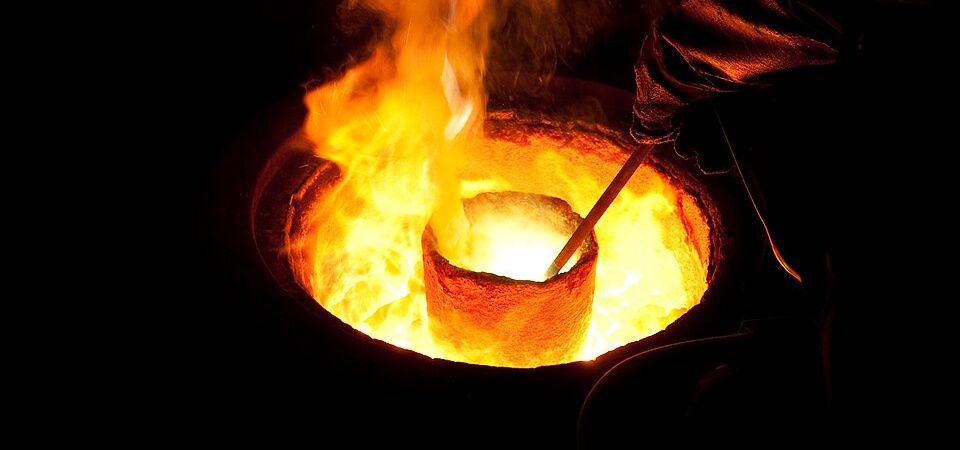
Whereas in the past, gold beaters would spend days hammering by hand stacks of gold leaf sandwiched between sheets of parchment, today’s manufacturers often combine traditional craftsmanship with precision rolling mills and automated beating equipment.
The process generally includes the following steps:
Cast pure gold into small ingots.
- Roll the gold into thin strips.
- Cut the strips into squares.
- To repeatedly hammer or mechanically beat gold between specialized membranes.
- Trim and pack the finished sheets into protective sleeves.
Although machines have improved the consistency of the process, many manufacturers of high-end gold leaf continue to rely on skilled artisans for the final steps.
Gold leaf, gold plating, and gold paint: What are the differences?
Although they can all produce a similar golden appearance, gold leaf, gold plating, and gold paint are very different materials.
Gold leaf
What It Is
Ultra-thin, hand-applied hammered gold leaf
Does it contain real gold?
Yes
Common Uses
Works of art, architecture, frames, domes, restoration
Gold Plating
What It Is
A thin layer of gold deposited onto another metal using electrochemical or chemical processes.
Does it contain real gold?
Yes
Common Uses
Jewelry, watches, electronic components, decorative hardware
The Golden Painting
What It Is
Pigments or metallic powders suspended in paint.
Does it contain real gold?
Usually not
Common Uses
Crafts, signage, theater props, decorative finishes
Gold leaf reflects light thanks to the real metallic gold, creating a warm, luminous glow that paints struggle to reproduce. Gold plating, on the other hand, provides a durable metallic coating on another object, whereas gold paint merely replicates the color of gold without offering its unique optical properties.
Can gold leaf withstand outdoor conditions?
One of the reasons gold leaf has remained popular for centuries is its remarkable durability.
Pure gold does not rust, tarnish, or oxidize when exposed to rain, sunlight, or temperature fluctuations. That is why high-quality gold leaf, ranging from 23½ to 24 karats, is commonly used on:
- Church domes
- Government Buildings
- Monumental Statues
- Weather Vanes
- Church Steeples
- Historic Landmarks
Although gold itself is exceptionally durable, the adhesive that holds it in place may eventually deteriorate. Depending on the climate and level of exposure, gilded surfaces outdoors may require restoration after several decades, while gilded surfaces protected indoors can retain their beauty for hundreds of years.
All over the world, many historic buildings still feature gilding that continues to shine generations after it was applied.
Gold Leaf in Art
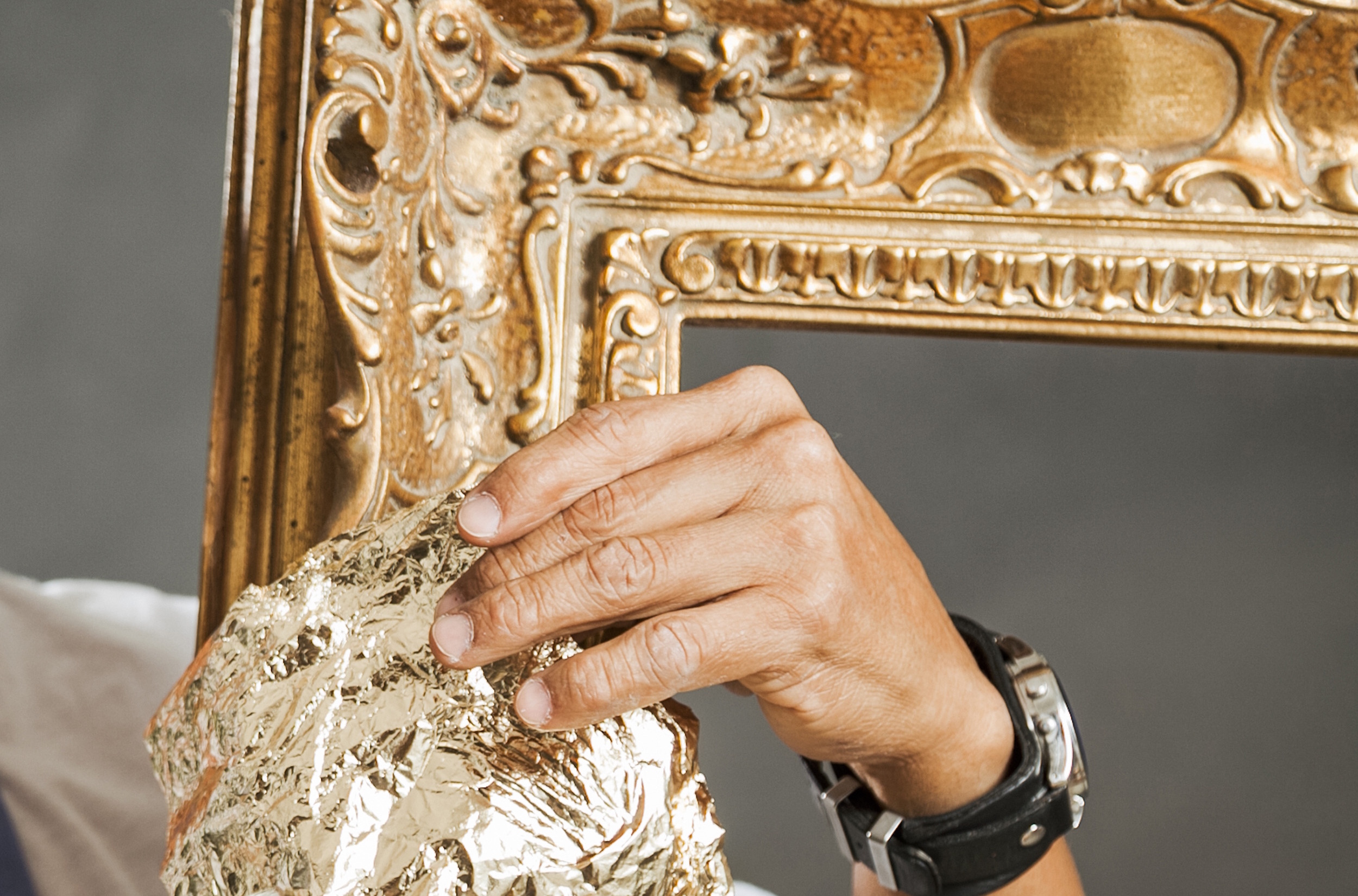
Artists continue to use gold leaf because no pigment can truly replicate the way gold reflects light.
Unlike metallic paint, real gold produces a warm, almost luminous sheen that changes depending on the angle from which it is viewed.
Gold leaf is used on:
- Religious Icons
- Executives
- The Sculptures
- Musical Instruments
- Luxury Furniture
- Contemporary Mixed-Media Artworks
Its exceptional durability also makes it a material of choice for conservation and restoration projects.
Is gold leaf expensive?
One of the most common misconceptions about gold leaf is that gilded objects must contain a fortune in gold.
In reality, the value of the gold often accounts for only a small portion of the project's total cost.
Because gold leaf is incredibly thin, even a large decorative frame or piece of furniture may contain only a fraction of an ounce of gold. Most of the cost generally comes from the highly specialized craftsmanship required to prepare the surface, apply the delicate gold leaf, polish the finish, and protect the finished piece.
Professional gilding is a true art form that requires patience and precision. A single misplaced breath can crease or tear a sheet of gold leaf before it even touches the surface.
That is why handcrafted gold objects sell for high prices—not because they contain large amounts of gold, but because they require exceptional craftsmanship.
Why is gold leaf different from gold paint?
At first glance, gold metallic paint may seem like a convincing substitute, but these two materials react very differently to light.
Gold paint contains pigments or metallic particles that reflect light in multiple directions. Although it can produce a beautiful golden color, it lacks both the depth and luster of real gold.
Gold leaf, on the other hand, is made from real metallic gold. Its smooth surface reflects light in a way that creates a rich, almost luminous effect, the appearance of which changes depending on the viewing angle.
That is why old paintings, richly ornate frames, and cathedral ceilings seem to shimmer in natural light. No pigment can perfectly reproduce the way real gold interacts with light.
Artists often describe genuine gold leaf as having a warmth and luminosity that are impossible to achieve with paint alone, no matter how advanced coating technologies may become.
Can you really eat gold?
Yes.
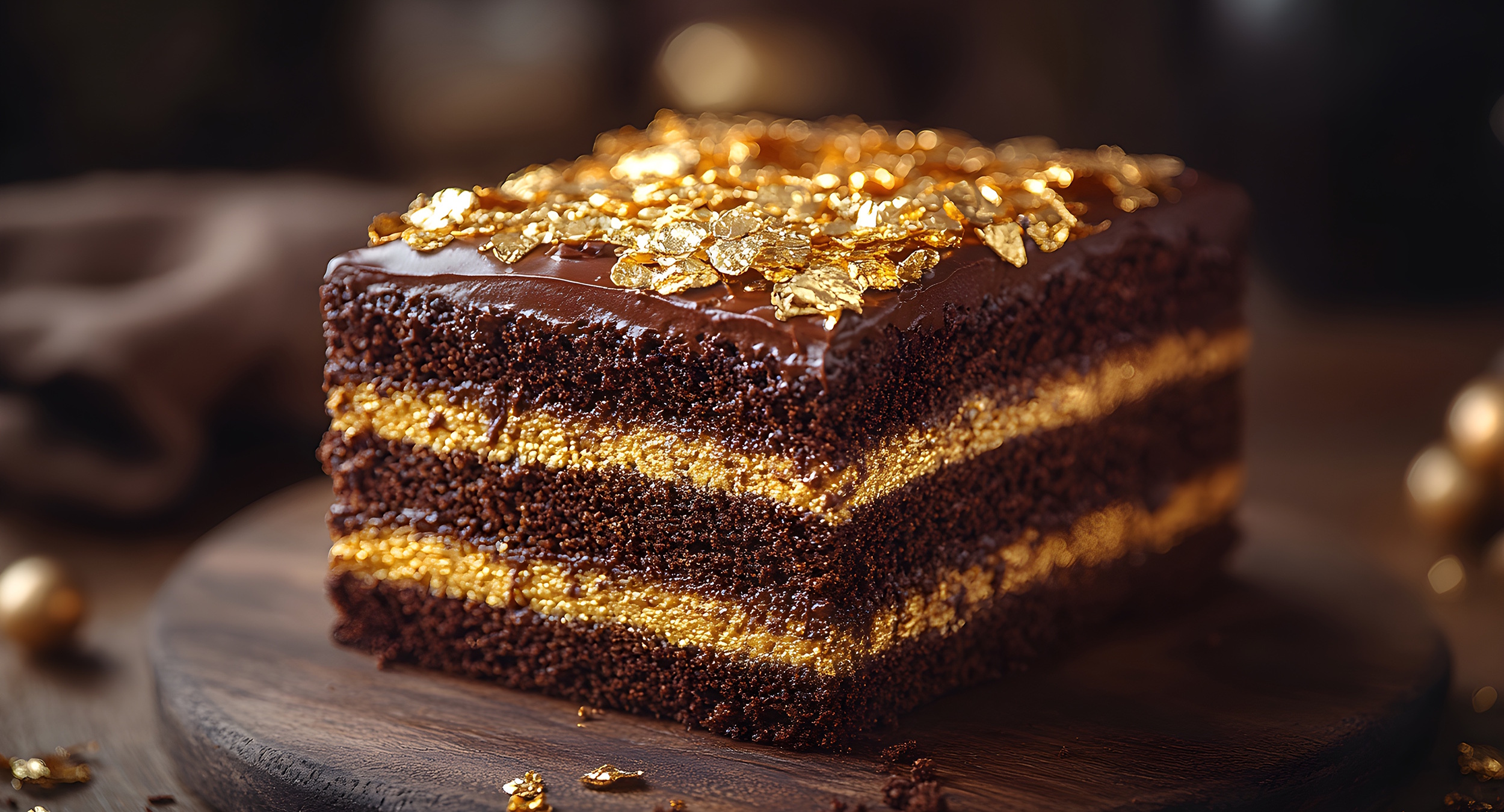
Edible gold leaf has been used for centuries and is commonly found in fine-dining restaurants around the world.
To be considered edible, gold must generally be 23 to 24 carats and be manufactured in accordance with strict food safety standards. Gold of lower purity may contain alloy metals that are not intended for consumption.
Edible gold leaf is used on:
- Chocolates
- Cakes
- Pastries
- Sushi
- Cocktails
- Ice Cream
- Luxury Confectioneries
Since the sheets are extremely thin, the actual amount of gold used is negligible.
Does consuming gold have any health benefits?
Gold is biologically inert, which means it does not react significantly with the body’s tissues or the digestive system. When consumed in the form of edible gold leaf, it generally passes through the digestive tract without being absorbed in any significant amount.
Therefore, there is no solid scientific evidence showing that edible gold leaf provides any nutritional benefits or advantages for the health of healthy people. Its value is almost entirely aesthetic: it adds a touch of visual luxury rather than providing any measurable nutritional value.
That said, gold has recognized medical applications in other forms:
- Some injectable gold compounds have already been used to treat certain autoimmune diseases, although they have largely been replaced by newer drugs.
- Gold is used in certain specialized medical devices as well as in some dental restorations, due to its excellent biocompatibility and resistance to corrosion.
- Gold nanoparticles are currently the subject of extensive research for targeted drug delivery, diagnostic imaging, and certain cancer treatments.
These medical applications use forms of gold that are specially designed for this purpose and should not be confused with edible gold leaf.
Gold That Spans the Centuries
One of the reasons gold leaf has been used for thousands of years is that gold itself is remarkably stable.
Unlike iron, copper, or silver, pure gold does not rust, corrode, or tarnish under normal conditions.
This means that a properly gilded surface can retain its luster for generations. Many churches, temples, and historic monuments still feature original or centuries-old gilding that continues to shine today.
A precious metal like no other
Gold leaf illustrates just how truly extraordinary gold is as a metal.
A single ounce of gold can be transformed from a solid gold investment coin into sheets large enough to decorate furniture, works of art, architectural elements, or even the ceiling of a room. This same precious metal, which serves as a store of wealth in central bank vaults, can also illuminate ancient manuscripts, crown the domes of historic buildings, and add a touch of elegance to haute cuisine.
For thousands of years, gold leaf has showcased an exceptional combination of beauty, durability, and craftsmanship. It serves as a reminder that the value of gold extends far beyond investment: it is also one of humanity’s oldest and most enduring artistic materials.